LinkedIn Facebook Twitter Email

Reshoring pharma: How policy, pressure, and pandemic lessons are rewriting supply chains

by Andrew Faber, CPCU, SVP, Liberty Mutual/Ironshore Healthcare

Reshoring pharma: How policy, pressure, and pandemic lessons are rewriting supply chains

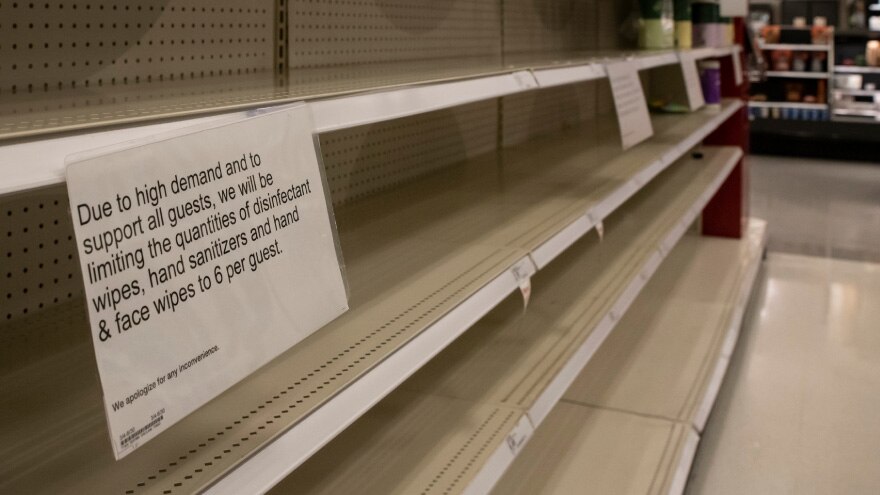
Six years beyond the 2020 COVID-19 pandemic, some are still drawing on surplus supplies of antiseptic wipes, masks, and Lysol. The pandemic revealed that the United States had largely shifted production of low-cost, disposable medical supplies and other healthcare products to distant locations with lower manufacturing costs. Massive, instantaneous global demand combined with offshore supplies created a knot in the supply chain, catching many Americans by surprise and leading to shortages, hoarding, and pop-up middlemen seeking a quick fortune.

Empty shelves

The U.S. represents the world’s largest market for pharmaceuticals. Yet almost 90% of sites that manufacture active pharmaceutical ingredients (API) for the U.S. market aren’t in this country. In addition, upwards of 60% of finished dosage form (FDF) medications come from foreign sites.1 This trend has continued, favoring offshore sourcing through the pandemic and leaving the U.S. marketplace in a precarious position amidst global supply chain pressure.

Behind the rise in international manufacturing

Several factors likely contributed to this trend:

  • Ease of shipping. Solid oral drugs are lightweight, small, and resistant to damage and can be safely and cheaply shipped over long distances via freight containers.
  • Synthetic ingredients. Most medications are synthetic rather than botanical. Without the need to draw on natural resources, manufacturing became location-agnostic.
  • Strong overseas facilities. Certain countries, India and China, for example, developed significant technical knowledge, infrastructure (power, clean water, transportation, housing, communication), and workforces, and added pharma manufacturing devices like mixers, blenders, tablet presses, and capsule/filling machines.
  • Funds and incentives. Public funds and/or incentives are sometimes used to build manufacturing plants and subsidize the cost to the pharmaceutical company.

In aggregate, these circumstances created substantial API and FDF manufacturing overseas at a meaningful discount and greater profit margins than were possible domestically. India and China, the largest beneficiaries, supply almost half of all API coming into the U.S.2

A more complex supply chain

While outsourcing created manufacturing expertise and lowered costs, it added layers to the supply chain. During the pandemic, this complexity not only slowed responsiveness, but it also made it more difficult to identify who manufactured generic forms of drugs. While both branded and generic manufacturers can be susceptible to supply-chain challenges, most large, branded firms have made heavy investments in a resilient and geographically diverse supply chain over a long period of time. Generic manufacturers, which supply roughly 90% of prescriptions in the U.S., generally operate on tight margins. Some products retail for pennies per dose, limiting the ability of generic manufacturers to invest in diversification and resilience.3

The U.S. response

Policymakers and manufacturers responded by prioritizing nearshoring and reshoring manufacturing capacity to reduce dependence on foreign suppliers. Domestic production can shorten supply chains, simplify quality oversight, and reduce exposure to geopolitical disruptions — important considerations amid rising global tensions and trade uncertainties.

Regulatory and policy actions have accelerated this movement. In May 2025, an executive order titled “Regulatory Relief to Promote Domestic Production of Critical Medicines” directed the Food and Drug Administration (FDA) and the Environmental Protection Agency (EPA) to streamline permit and inspection processes for domestic pharmaceutical facilities. In October 2025, the FDA announced a pilot program to speed review times for generic drug makers that source API domestically and test and manufacture products in the U.S. Most recently, in February 2026, the FDA launched PreCheck, a program that fast-tracks manufacturing site approval so plants can come online more quickly.

Thanks in part to these incentives, the U.S. pharmaceutical manufacturing landscape is undergoing significant transformation with major investment and expansion. Recent developments include:

  • AbbVie: Began construction on a $195 million active pharmaceutical ingredient (API) manufacturing facility in North Chicago, Illinois.
  • AstraZeneca: Announced plans to invest $50 billion in the U.S. by 2030, including a $4.5B investment to build two manufacturing facilities in Virginia.
  • Eli Lilly: Announced a $27 billion plan to build four mega-sites in the U.S. over five years.
  • Johnson & Johnson: Committed $2 billion to expand manufacturing capacity in North Carolina, including building new biologics manufacturing facility in Wilson.
  • Merck: Planned a $3 billion manufacturing facility in Rockingham County, Virginia, adding 500 jobs and expanding operations.
  • Novartis: Committed $23 billion for six new U.S. plants, including a flagship manufacturing hub in North Carolina.
  • UCB: Has plans for a new, state-of-the-art biologics manufacturing facility in the U.S., expected to create 300 permanent jobs.

Domestic shift gains momentum

Onshoring continues to have challenges. Building and repurposing facilities requires significant capital investment and a reliable domestic supply of raw materials. Skilled labor shortages, environmental permitting, and local infrastructure constraints can slow projects. Moreover, market forces and cost dynamics can mean some low-margin products need to remain offshore to be economically produced.

Despite these dynamics, the balance appears to be shifting. The combination of policy incentives, technological advances, and lessons from recent global disruptions has created momentum. Companies increasingly view domestic manufacturing as a strategic imperative — a way to safeguard patients, protect brand reputation, and maintain continuity in crises. An increase in U.S. manufacturing capacity may also help the domestic health care system grow more robust, responsive, and secure, with potential benefits for public health and national resilience.

Liberty Mutual and Ironshore Insurance offer dedicated resources for the pharmaceutical industry, with bespoke coverages across the property‑casualty spectrum. We offer lines for construction, workers compensation, commercial auto, general liability, cyber, environmental, financial (D&O, M&A, reps & warranties), umbrella, property, inland marine, and product liability.


Sources:

1 Yashna Shivdasani et al., “The Geography of Prescription Pharmaceuticals Supplied to the USA: Levels, Trends, and Implications,” Journal of Law and the Biosciences 8, no. 1 (2021): lsaa085, https://pmc.ncbi.nlm.nih.gov/articles/PMC8109232/.

2 Ibid

3 Ibid

4 Daily Compilation of Presidential Documents, No. DCPD‑202500562 (May 2025), U.S. Government Publishing Office, https://www.govinfo.gov/content/pkg/DCPD-202500562/pdf/DCPD-202500562.pdf

Further reading:

This website is general in nature, and is provided as a courtesy to you. Information is accurate to the best of Liberty Mutual’s knowledge, but companies and individuals should not rely on it to prevent and mitigate all risks as an explanation of coverage or benefits under an insurance policy. Consult your professional advisor regarding your particular facts and circumstance. By citing external authorities or linking to other websites, Liberty Mutual is not endorsing them.